Lab8 dane nieustruktyryzowane

Dane nieustrukturyzowane to dane, które nie są w żaden sposób uporządkowane, takie jak:

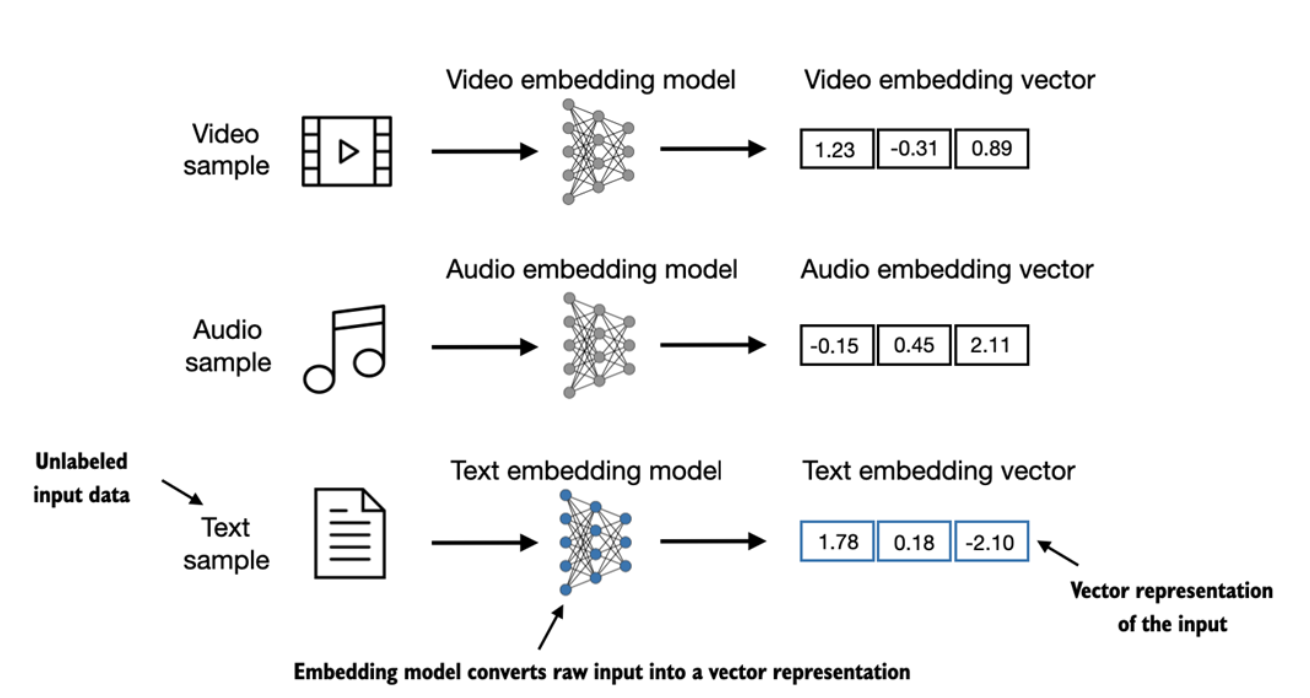
Niezależnie od typu, wszystko przetwarzamy w tensorach (macierzach wielowymiarowych). To może prowadzić do chęci wykorzystania modeli ML i sieci neuronowych do analizy danych nieustrukturyzowanych.

import numpy as np
import seaborn as sns
import matplotlib.pyplot as plt
sns.set(style="whitegrid", palette="husl")


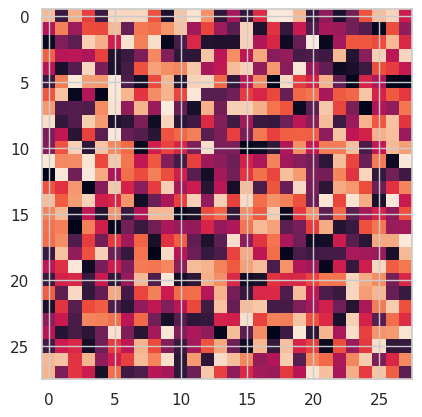
# 2-dim picture 28 x 28 pixel
picture_2d = np.random.uniform(size=(28,28))
picture_2d[0:5,0:5]
array([[0.87034958, 0.16073778, 0.84272754, 0.60199508, 0.15423195],
       [0.44907861, 0.73598713, 0.39411018, 0.62567532, 0.61906615],
       [0.03391947, 0.32878753, 0.24041941, 0.92752844, 0.84307137],
       [0.67095923, 0.45683719, 0.4618619 , 0.42645623, 0.60712762],
       [0.46078787, 0.07278108, 0.22462421, 0.94541969, 0.30833405]])
plt.imshow(picture_2d, interpolation='nearest')
plt.show()

pretrenowane modele klasyfikujące

import requests

url = 'https://pytorch.tips/coffee'
fpath = 'coffee.jpg'

# Dodajemy nagłówek udający prawdziwą przeglądarkę
headers = {
    'User-Agent': 'Mozilla/5.0 (Windows NT 10.0; Win64; x64) AppleWebKit/537.36 (KHTML, like Gecko) Chrome/120.0.0.0 Safari/537.36'
}

try:
    response = requests.get(url, headers=headers)
    response.raise_for_status()  # Rzuci błąd, jeśli strona nie działa (np. 404 lub 403)
    
    # Zapisujemy pobraną zawartość do pliku
    with open(fpath, 'wb') as f:
        f.write(response.content)
    print("Obrazek pobrany pomyślnie!")
    
except requests.exceptions.RequestException as e:
    print(f"Błąd podczas pobierania: {e}")
Obrazek pobrany pomyślnie!
import matplotlib.pyplot as plt
from PIL import Image # pillow library
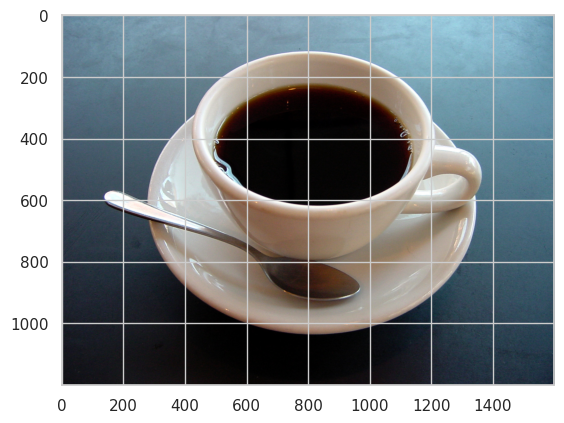
img = Image.open('coffee.jpg')
plt.imshow(img)

#!pip install torch torchvision --index-url https://download.pytorch.org/whl/cpu
import torch
from torchvision import transforms
from torchvision import models

models.list_models()[:5]
['alexnet',
 'convnext_base',
 'convnext_large',
 'convnext_small',
 'convnext_tiny']

Odrobinę zmienimy własności obrazka

transform = transforms.Compose([
    transforms.Resize(256),
    transforms.CenterCrop(224),
    transforms.ToTensor(),
    transforms.Normalize( 
    mean = [0.485, 0.456, 0.406],
    std = [0.229, 0.224,0.225])
])
img_tensor = transform(img)

Sprawdzmy rozmiary

type(img_tensor), img_tensor.shape
(torch.Tensor, torch.Size([3, 224, 224]))
# utworzenie batch size - dodatkowego wymiaru (na inne obrazki)
batch = img_tensor.unsqueeze(0)
batch.shape
torch.Size([1, 3, 224, 224])

Załadujmy gotowy model

alexnet = models.alexnet('weights=AlexNet_Weights.DEFAULT')
/opt/conda/lib/python3.11/site-packages/torchvision/models/_utils.py:208: UserWarning: The parameter 'pretrained' is deprecated since 0.13 and may be removed in the future, please use 'weights' instead.
  warnings.warn(
/opt/conda/lib/python3.11/site-packages/torchvision/models/_utils.py:223: UserWarning: Arguments other than a weight enum or `None` for 'weights' are deprecated since 0.13 and may be removed in the future. The current behavior is equivalent to passing `weights=AlexNet_Weights.IMAGENET1K_V1`. You can also use `weights=AlexNet_Weights.DEFAULT` to get the most up-to-date weights.
  warnings.warn(msg)
Downloading: "https://download.pytorch.org/models/alexnet-owt-7be5be79.pth" to /home/jovyan/.cache/torch/hub/checkpoints/alexnet-owt-7be5be79.pth
100%|██████████| 233M/233M [02:14<00:00, 1.81MB/s] 
alexnet
AlexNet(
  (features): Sequential(
    (0): Conv2d(3, 64, kernel_size=(11, 11), stride=(4, 4), padding=(2, 2))
    (1): ReLU(inplace=True)
    (2): MaxPool2d(kernel_size=3, stride=2, padding=0, dilation=1, ceil_mode=False)
    (3): Conv2d(64, 192, kernel_size=(5, 5), stride=(1, 1), padding=(2, 2))
    (4): ReLU(inplace=True)
    (5): MaxPool2d(kernel_size=3, stride=2, padding=0, dilation=1, ceil_mode=False)
    (6): Conv2d(192, 384, kernel_size=(3, 3), stride=(1, 1), padding=(1, 1))
    (7): ReLU(inplace=True)
    (8): Conv2d(384, 256, kernel_size=(3, 3), stride=(1, 1), padding=(1, 1))
    (9): ReLU(inplace=True)
    (10): Conv2d(256, 256, kernel_size=(3, 3), stride=(1, 1), padding=(1, 1))
    (11): ReLU(inplace=True)
    (12): MaxPool2d(kernel_size=3, stride=2, padding=0, dilation=1, ceil_mode=False)
  )
  (avgpool): AdaptiveAvgPool2d(output_size=(6, 6))
  (classifier): Sequential(
    (0): Dropout(p=0.5, inplace=False)
    (1): Linear(in_features=9216, out_features=4096, bias=True)
    (2): ReLU(inplace=True)
    (3): Dropout(p=0.5, inplace=False)
    (4): Linear(in_features=4096, out_features=4096, bias=True)
    (5): ReLU(inplace=True)
    (6): Linear(in_features=4096, out_features=1000, bias=True)
  )
)
alexnet.eval()
predict = alexnet(batch)
_, idx = torch.max(predict,1)
print(idx)
tensor([967])
import urllib
url = 'https://pytorch.tips/imagenet-labels'
fpath = 'imagenet_class_labels.txt'
urllib.request.urlretrieve(url, fpath)
('imagenet_class_labels.txt', <http.client.HTTPMessage at 0xffff1c51bf10>)
with open('imagenet_class_labels.txt') as f:
    classes = [line.strip() for line in f.readlines()]
classes[0:5]
["{0: 'tench, Tinca tinca',",
 "1: 'goldfish, Carassius auratus',",
 "2: 'great white shark, white shark, man-eater, man-eating shark, Carcharodon carcharias',",
 "3: 'tiger shark, Galeocerdo cuvieri',",
 "4: 'hammerhead, hammerhead shark',"]
prob = torch.nn.functional.softmax(predict, dim=1)[0] *100
prob[:10]
tensor([2.5403e-09, 1.5528e-07, 1.2023e-08, 1.0434e-09, 2.9924e-07, 3.6094e-08,
        8.3350e-10, 1.4222e-11, 1.0724e-10, 1.2831e-10],
       grad_fn=<SliceBackward0>)
classes[idx.item()], prob[idx.item()].item()
("967: 'espresso',", 87.99555969238281)
resnet = models.resnet101(weights=models.ResNet101_Weights.DEFAULT)
Downloading: "https://download.pytorch.org/models/resnet101-cd907fc2.pth" to /home/jovyan/.cache/torch/hub/checkpoints/resnet101-cd907fc2.pth
100%|██████████| 171M/171M [01:33<00:00, 1.90MB/s] 
resnet
ResNet(
  (conv1): Conv2d(3, 64, kernel_size=(7, 7), stride=(2, 2), padding=(3, 3), bias=False)
  (bn1): BatchNorm2d(64, eps=1e-05, momentum=0.1, affine=True, bias=True, track_running_stats=True)
  (relu): ReLU(inplace=True)
  (maxpool): MaxPool2d(kernel_size=3, stride=2, padding=1, dilation=1, ceil_mode=False)
  (layer1): Sequential(
    (0): Bottleneck(
      (conv1): Conv2d(64, 64, kernel_size=(1, 1), stride=(1, 1), bias=False)
      (bn1): BatchNorm2d(64, eps=1e-05, momentum=0.1, affine=True, bias=True, track_running_stats=True)
      (conv2): Conv2d(64, 64, kernel_size=(3, 3), stride=(1, 1), padding=(1, 1), bias=False)
      (bn2): BatchNorm2d(64, eps=1e-05, momentum=0.1, affine=True, bias=True, track_running_stats=True)
      (conv3): Conv2d(64, 256, kernel_size=(1, 1), stride=(1, 1), bias=False)
      (bn3): BatchNorm2d(256, eps=1e-05, momentum=0.1, affine=True, bias=True, track_running_stats=True)
      (relu): ReLU(inplace=True)
      (downsample): Sequential(
        (0): Conv2d(64, 256, kernel_size=(1, 1), stride=(1, 1), bias=False)
        (1): BatchNorm2d(256, eps=1e-05, momentum=0.1, affine=True, bias=True, track_running_stats=True)
      )
    )
    (1): Bottleneck(
      (conv1): Conv2d(256, 64, kernel_size=(1, 1), stride=(1, 1), bias=False)
      (bn1): BatchNorm2d(64, eps=1e-05, momentum=0.1, affine=True, bias=True, track_running_stats=True)
      (conv2): Conv2d(64, 64, kernel_size=(3, 3), stride=(1, 1), padding=(1, 1), bias=False)
      (bn2): BatchNorm2d(64, eps=1e-05, momentum=0.1, affine=True, bias=True, track_running_stats=True)
      (conv3): Conv2d(64, 256, kernel_size=(1, 1), stride=(1, 1), bias=False)
      (bn3): BatchNorm2d(256, eps=1e-05, momentum=0.1, affine=True, bias=True, track_running_stats=True)
      (relu): ReLU(inplace=True)
    )
    (2): Bottleneck(
      (conv1): Conv2d(256, 64, kernel_size=(1, 1), stride=(1, 1), bias=False)
      (bn1): BatchNorm2d(64, eps=1e-05, momentum=0.1, affine=True, bias=True, track_running_stats=True)
      (conv2): Conv2d(64, 64, kernel_size=(3, 3), stride=(1, 1), padding=(1, 1), bias=False)
      (bn2): BatchNorm2d(64, eps=1e-05, momentum=0.1, affine=True, bias=True, track_running_stats=True)
      (conv3): Conv2d(64, 256, kernel_size=(1, 1), stride=(1, 1), bias=False)
      (bn3): BatchNorm2d(256, eps=1e-05, momentum=0.1, affine=True, bias=True, track_running_stats=True)
      (relu): ReLU(inplace=True)
    )
  )
  (layer2): Sequential(
    (0): Bottleneck(
      (conv1): Conv2d(256, 128, kernel_size=(1, 1), stride=(1, 1), bias=False)
      (bn1): BatchNorm2d(128, eps=1e-05, momentum=0.1, affine=True, bias=True, track_running_stats=True)
      (conv2): Conv2d(128, 128, kernel_size=(3, 3), stride=(2, 2), padding=(1, 1), bias=False)
      (bn2): BatchNorm2d(128, eps=1e-05, momentum=0.1, affine=True, bias=True, track_running_stats=True)
      (conv3): Conv2d(128, 512, kernel_size=(1, 1), stride=(1, 1), bias=False)
      (bn3): BatchNorm2d(512, eps=1e-05, momentum=0.1, affine=True, bias=True, track_running_stats=True)
      (relu): ReLU(inplace=True)
      (downsample): Sequential(
        (0): Conv2d(256, 512, kernel_size=(1, 1), stride=(2, 2), bias=False)
        (1): BatchNorm2d(512, eps=1e-05, momentum=0.1, affine=True, bias=True, track_running_stats=True)
      )
    )
    (1): Bottleneck(
      (conv1): Conv2d(512, 128, kernel_size=(1, 1), stride=(1, 1), bias=False)
      (bn1): BatchNorm2d(128, eps=1e-05, momentum=0.1, affine=True, bias=True, track_running_stats=True)
      (conv2): Conv2d(128, 128, kernel_size=(3, 3), stride=(1, 1), padding=(1, 1), bias=False)
      (bn2): BatchNorm2d(128, eps=1e-05, momentum=0.1, affine=True, bias=True, track_running_stats=True)
      (conv3): Conv2d(128, 512, kernel_size=(1, 1), stride=(1, 1), bias=False)
      (bn3): BatchNorm2d(512, eps=1e-05, momentum=0.1, affine=True, bias=True, track_running_stats=True)
      (relu): ReLU(inplace=True)
    )
    (2): Bottleneck(
      (conv1): Conv2d(512, 128, kernel_size=(1, 1), stride=(1, 1), bias=False)
      (bn1): BatchNorm2d(128, eps=1e-05, momentum=0.1, affine=True, bias=True, track_running_stats=True)
      (conv2): Conv2d(128, 128, kernel_size=(3, 3), stride=(1, 1), padding=(1, 1), bias=False)
      (bn2): BatchNorm2d(128, eps=1e-05, momentum=0.1, affine=True, bias=True, track_running_stats=True)
      (conv3): Conv2d(128, 512, kernel_size=(1, 1), stride=(1, 1), bias=False)
      (bn3): BatchNorm2d(512, eps=1e-05, momentum=0.1, affine=True, bias=True, track_running_stats=True)
      (relu): ReLU(inplace=True)
    )
    (3): Bottleneck(
      (conv1): Conv2d(512, 128, kernel_size=(1, 1), stride=(1, 1), bias=False)
      (bn1): BatchNorm2d(128, eps=1e-05, momentum=0.1, affine=True, bias=True, track_running_stats=True)
      (conv2): Conv2d(128, 128, kernel_size=(3, 3), stride=(1, 1), padding=(1, 1), bias=False)
      (bn2): BatchNorm2d(128, eps=1e-05, momentum=0.1, affine=True, bias=True, track_running_stats=True)
      (conv3): Conv2d(128, 512, kernel_size=(1, 1), stride=(1, 1), bias=False)
      (bn3): BatchNorm2d(512, eps=1e-05, momentum=0.1, affine=True, bias=True, track_running_stats=True)
      (relu): ReLU(inplace=True)
    )
  )
  (layer3): Sequential(
    (0): Bottleneck(
      (conv1): Conv2d(512, 256, kernel_size=(1, 1), stride=(1, 1), bias=False)
      (bn1): BatchNorm2d(256, eps=1e-05, momentum=0.1, affine=True, bias=True, track_running_stats=True)
      (conv2): Conv2d(256, 256, kernel_size=(3, 3), stride=(2, 2), padding=(1, 1), bias=False)
      (bn2): BatchNorm2d(256, eps=1e-05, momentum=0.1, affine=True, bias=True, track_running_stats=True)
      (conv3): Conv2d(256, 1024, kernel_size=(1, 1), stride=(1, 1), bias=False)
      (bn3): BatchNorm2d(1024, eps=1e-05, momentum=0.1, affine=True, bias=True, track_running_stats=True)
      (relu): ReLU(inplace=True)
      (downsample): Sequential(
        (0): Conv2d(512, 1024, kernel_size=(1, 1), stride=(2, 2), bias=False)
        (1): BatchNorm2d(1024, eps=1e-05, momentum=0.1, affine=True, bias=True, track_running_stats=True)
      )
    )
    (1): Bottleneck(
      (conv1): Conv2d(1024, 256, kernel_size=(1, 1), stride=(1, 1), bias=False)
      (bn1): BatchNorm2d(256, eps=1e-05, momentum=0.1, affine=True, bias=True, track_running_stats=True)
      (conv2): Conv2d(256, 256, kernel_size=(3, 3), stride=(1, 1), padding=(1, 1), bias=False)
      (bn2): BatchNorm2d(256, eps=1e-05, momentum=0.1, affine=True, bias=True, track_running_stats=True)
      (conv3): Conv2d(256, 1024, kernel_size=(1, 1), stride=(1, 1), bias=False)
      (bn3): BatchNorm2d(1024, eps=1e-05, momentum=0.1, affine=True, bias=True, track_running_stats=True)
      (relu): ReLU(inplace=True)
    )
    (2): Bottleneck(
      (conv1): Conv2d(1024, 256, kernel_size=(1, 1), stride=(1, 1), bias=False)
      (bn1): BatchNorm2d(256, eps=1e-05, momentum=0.1, affine=True, bias=True, track_running_stats=True)
      (conv2): Conv2d(256, 256, kernel_size=(3, 3), stride=(1, 1), padding=(1, 1), bias=False)
      (bn2): BatchNorm2d(256, eps=1e-05, momentum=0.1, affine=True, bias=True, track_running_stats=True)
      (conv3): Conv2d(256, 1024, kernel_size=(1, 1), stride=(1, 1), bias=False)
      (bn3): BatchNorm2d(1024, eps=1e-05, momentum=0.1, affine=True, bias=True, track_running_stats=True)
      (relu): ReLU(inplace=True)
    )
    (3): Bottleneck(
      (conv1): Conv2d(1024, 256, kernel_size=(1, 1), stride=(1, 1), bias=False)
      (bn1): BatchNorm2d(256, eps=1e-05, momentum=0.1, affine=True, bias=True, track_running_stats=True)
      (conv2): Conv2d(256, 256, kernel_size=(3, 3), stride=(1, 1), padding=(1, 1), bias=False)
      (bn2): BatchNorm2d(256, eps=1e-05, momentum=0.1, affine=True, bias=True, track_running_stats=True)
      (conv3): Conv2d(256, 1024, kernel_size=(1, 1), stride=(1, 1), bias=False)
      (bn3): BatchNorm2d(1024, eps=1e-05, momentum=0.1, affine=True, bias=True, track_running_stats=True)
      (relu): ReLU(inplace=True)
    )
    (4): Bottleneck(
      (conv1): Conv2d(1024, 256, kernel_size=(1, 1), stride=(1, 1), bias=False)
      (bn1): BatchNorm2d(256, eps=1e-05, momentum=0.1, affine=True, bias=True, track_running_stats=True)
      (conv2): Conv2d(256, 256, kernel_size=(3, 3), stride=(1, 1), padding=(1, 1), bias=False)
      (bn2): BatchNorm2d(256, eps=1e-05, momentum=0.1, affine=True, bias=True, track_running_stats=True)
      (conv3): Conv2d(256, 1024, kernel_size=(1, 1), stride=(1, 1), bias=False)
      (bn3): BatchNorm2d(1024, eps=1e-05, momentum=0.1, affine=True, bias=True, track_running_stats=True)
      (relu): ReLU(inplace=True)
    )
    (5): Bottleneck(
      (conv1): Conv2d(1024, 256, kernel_size=(1, 1), stride=(1, 1), bias=False)
      (bn1): BatchNorm2d(256, eps=1e-05, momentum=0.1, affine=True, bias=True, track_running_stats=True)
      (conv2): Conv2d(256, 256, kernel_size=(3, 3), stride=(1, 1), padding=(1, 1), bias=False)
      (bn2): BatchNorm2d(256, eps=1e-05, momentum=0.1, affine=True, bias=True, track_running_stats=True)
      (conv3): Conv2d(256, 1024, kernel_size=(1, 1), stride=(1, 1), bias=False)
      (bn3): BatchNorm2d(1024, eps=1e-05, momentum=0.1, affine=True, bias=True, track_running_stats=True)
      (relu): ReLU(inplace=True)
    )
    (6): Bottleneck(
      (conv1): Conv2d(1024, 256, kernel_size=(1, 1), stride=(1, 1), bias=False)
      (bn1): BatchNorm2d(256, eps=1e-05, momentum=0.1, affine=True, bias=True, track_running_stats=True)
      (conv2): Conv2d(256, 256, kernel_size=(3, 3), stride=(1, 1), padding=(1, 1), bias=False)
      (bn2): BatchNorm2d(256, eps=1e-05, momentum=0.1, affine=True, bias=True, track_running_stats=True)
      (conv3): Conv2d(256, 1024, kernel_size=(1, 1), stride=(1, 1), bias=False)
      (bn3): BatchNorm2d(1024, eps=1e-05, momentum=0.1, affine=True, bias=True, track_running_stats=True)
      (relu): ReLU(inplace=True)
    )
    (7): Bottleneck(
      (conv1): Conv2d(1024, 256, kernel_size=(1, 1), stride=(1, 1), bias=False)
      (bn1): BatchNorm2d(256, eps=1e-05, momentum=0.1, affine=True, bias=True, track_running_stats=True)
      (conv2): Conv2d(256, 256, kernel_size=(3, 3), stride=(1, 1), padding=(1, 1), bias=False)
      (bn2): BatchNorm2d(256, eps=1e-05, momentum=0.1, affine=True, bias=True, track_running_stats=True)
      (conv3): Conv2d(256, 1024, kernel_size=(1, 1), stride=(1, 1), bias=False)
      (bn3): BatchNorm2d(1024, eps=1e-05, momentum=0.1, affine=True, bias=True, track_running_stats=True)
      (relu): ReLU(inplace=True)
    )
    (8): Bottleneck(
      (conv1): Conv2d(1024, 256, kernel_size=(1, 1), stride=(1, 1), bias=False)
      (bn1): BatchNorm2d(256, eps=1e-05, momentum=0.1, affine=True, bias=True, track_running_stats=True)
      (conv2): Conv2d(256, 256, kernel_size=(3, 3), stride=(1, 1), padding=(1, 1), bias=False)
      (bn2): BatchNorm2d(256, eps=1e-05, momentum=0.1, affine=True, bias=True, track_running_stats=True)
      (conv3): Conv2d(256, 1024, kernel_size=(1, 1), stride=(1, 1), bias=False)
      (bn3): BatchNorm2d(1024, eps=1e-05, momentum=0.1, affine=True, bias=True, track_running_stats=True)
      (relu): ReLU(inplace=True)
    )
    (9): Bottleneck(
      (conv1): Conv2d(1024, 256, kernel_size=(1, 1), stride=(1, 1), bias=False)
      (bn1): BatchNorm2d(256, eps=1e-05, momentum=0.1, affine=True, bias=True, track_running_stats=True)
      (conv2): Conv2d(256, 256, kernel_size=(3, 3), stride=(1, 1), padding=(1, 1), bias=False)
      (bn2): BatchNorm2d(256, eps=1e-05, momentum=0.1, affine=True, bias=True, track_running_stats=True)
      (conv3): Conv2d(256, 1024, kernel_size=(1, 1), stride=(1, 1), bias=False)
      (bn3): BatchNorm2d(1024, eps=1e-05, momentum=0.1, affine=True, bias=True, track_running_stats=True)
      (relu): ReLU(inplace=True)
    )
    (10): Bottleneck(
      (conv1): Conv2d(1024, 256, kernel_size=(1, 1), stride=(1, 1), bias=False)
      (bn1): BatchNorm2d(256, eps=1e-05, momentum=0.1, affine=True, bias=True, track_running_stats=True)
      (conv2): Conv2d(256, 256, kernel_size=(3, 3), stride=(1, 1), padding=(1, 1), bias=False)
      (bn2): BatchNorm2d(256, eps=1e-05, momentum=0.1, affine=True, bias=True, track_running_stats=True)
      (conv3): Conv2d(256, 1024, kernel_size=(1, 1), stride=(1, 1), bias=False)
      (bn3): BatchNorm2d(1024, eps=1e-05, momentum=0.1, affine=True, bias=True, track_running_stats=True)
      (relu): ReLU(inplace=True)
    )
    (11): Bottleneck(
      (conv1): Conv2d(1024, 256, kernel_size=(1, 1), stride=(1, 1), bias=False)
      (bn1): BatchNorm2d(256, eps=1e-05, momentum=0.1, affine=True, bias=True, track_running_stats=True)
      (conv2): Conv2d(256, 256, kernel_size=(3, 3), stride=(1, 1), padding=(1, 1), bias=False)
      (bn2): BatchNorm2d(256, eps=1e-05, momentum=0.1, affine=True, bias=True, track_running_stats=True)
      (conv3): Conv2d(256, 1024, kernel_size=(1, 1), stride=(1, 1), bias=False)
      (bn3): BatchNorm2d(1024, eps=1e-05, momentum=0.1, affine=True, bias=True, track_running_stats=True)
      (relu): ReLU(inplace=True)
    )
    (12): Bottleneck(
      (conv1): Conv2d(1024, 256, kernel_size=(1, 1), stride=(1, 1), bias=False)
      (bn1): BatchNorm2d(256, eps=1e-05, momentum=0.1, affine=True, bias=True, track_running_stats=True)
      (conv2): Conv2d(256, 256, kernel_size=(3, 3), stride=(1, 1), padding=(1, 1), bias=False)
      (bn2): BatchNorm2d(256, eps=1e-05, momentum=0.1, affine=True, bias=True, track_running_stats=True)
      (conv3): Conv2d(256, 1024, kernel_size=(1, 1), stride=(1, 1), bias=False)
      (bn3): BatchNorm2d(1024, eps=1e-05, momentum=0.1, affine=True, bias=True, track_running_stats=True)
      (relu): ReLU(inplace=True)
    )
    (13): Bottleneck(
      (conv1): Conv2d(1024, 256, kernel_size=(1, 1), stride=(1, 1), bias=False)
      (bn1): BatchNorm2d(256, eps=1e-05, momentum=0.1, affine=True, bias=True, track_running_stats=True)
      (conv2): Conv2d(256, 256, kernel_size=(3, 3), stride=(1, 1), padding=(1, 1), bias=False)
      (bn2): BatchNorm2d(256, eps=1e-05, momentum=0.1, affine=True, bias=True, track_running_stats=True)
      (conv3): Conv2d(256, 1024, kernel_size=(1, 1), stride=(1, 1), bias=False)
      (bn3): BatchNorm2d(1024, eps=1e-05, momentum=0.1, affine=True, bias=True, track_running_stats=True)
      (relu): ReLU(inplace=True)
    )
    (14): Bottleneck(
      (conv1): Conv2d(1024, 256, kernel_size=(1, 1), stride=(1, 1), bias=False)
      (bn1): BatchNorm2d(256, eps=1e-05, momentum=0.1, affine=True, bias=True, track_running_stats=True)
      (conv2): Conv2d(256, 256, kernel_size=(3, 3), stride=(1, 1), padding=(1, 1), bias=False)
      (bn2): BatchNorm2d(256, eps=1e-05, momentum=0.1, affine=True, bias=True, track_running_stats=True)
      (conv3): Conv2d(256, 1024, kernel_size=(1, 1), stride=(1, 1), bias=False)
      (bn3): BatchNorm2d(1024, eps=1e-05, momentum=0.1, affine=True, bias=True, track_running_stats=True)
      (relu): ReLU(inplace=True)
    )
    (15): Bottleneck(
      (conv1): Conv2d(1024, 256, kernel_size=(1, 1), stride=(1, 1), bias=False)
      (bn1): BatchNorm2d(256, eps=1e-05, momentum=0.1, affine=True, bias=True, track_running_stats=True)
      (conv2): Conv2d(256, 256, kernel_size=(3, 3), stride=(1, 1), padding=(1, 1), bias=False)
      (bn2): BatchNorm2d(256, eps=1e-05, momentum=0.1, affine=True, bias=True, track_running_stats=True)
      (conv3): Conv2d(256, 1024, kernel_size=(1, 1), stride=(1, 1), bias=False)
      (bn3): BatchNorm2d(1024, eps=1e-05, momentum=0.1, affine=True, bias=True, track_running_stats=True)
      (relu): ReLU(inplace=True)
    )
    (16): Bottleneck(
      (conv1): Conv2d(1024, 256, kernel_size=(1, 1), stride=(1, 1), bias=False)
      (bn1): BatchNorm2d(256, eps=1e-05, momentum=0.1, affine=True, bias=True, track_running_stats=True)
      (conv2): Conv2d(256, 256, kernel_size=(3, 3), stride=(1, 1), padding=(1, 1), bias=False)
      (bn2): BatchNorm2d(256, eps=1e-05, momentum=0.1, affine=True, bias=True, track_running_stats=True)
      (conv3): Conv2d(256, 1024, kernel_size=(1, 1), stride=(1, 1), bias=False)
      (bn3): BatchNorm2d(1024, eps=1e-05, momentum=0.1, affine=True, bias=True, track_running_stats=True)
      (relu): ReLU(inplace=True)
    )
    (17): Bottleneck(
      (conv1): Conv2d(1024, 256, kernel_size=(1, 1), stride=(1, 1), bias=False)
      (bn1): BatchNorm2d(256, eps=1e-05, momentum=0.1, affine=True, bias=True, track_running_stats=True)
      (conv2): Conv2d(256, 256, kernel_size=(3, 3), stride=(1, 1), padding=(1, 1), bias=False)
      (bn2): BatchNorm2d(256, eps=1e-05, momentum=0.1, affine=True, bias=True, track_running_stats=True)
      (conv3): Conv2d(256, 1024, kernel_size=(1, 1), stride=(1, 1), bias=False)
      (bn3): BatchNorm2d(1024, eps=1e-05, momentum=0.1, affine=True, bias=True, track_running_stats=True)
      (relu): ReLU(inplace=True)
    )
    (18): Bottleneck(
      (conv1): Conv2d(1024, 256, kernel_size=(1, 1), stride=(1, 1), bias=False)
      (bn1): BatchNorm2d(256, eps=1e-05, momentum=0.1, affine=True, bias=True, track_running_stats=True)
      (conv2): Conv2d(256, 256, kernel_size=(3, 3), stride=(1, 1), padding=(1, 1), bias=False)
      (bn2): BatchNorm2d(256, eps=1e-05, momentum=0.1, affine=True, bias=True, track_running_stats=True)
      (conv3): Conv2d(256, 1024, kernel_size=(1, 1), stride=(1, 1), bias=False)
      (bn3): BatchNorm2d(1024, eps=1e-05, momentum=0.1, affine=True, bias=True, track_running_stats=True)
      (relu): ReLU(inplace=True)
    )
    (19): Bottleneck(
      (conv1): Conv2d(1024, 256, kernel_size=(1, 1), stride=(1, 1), bias=False)
      (bn1): BatchNorm2d(256, eps=1e-05, momentum=0.1, affine=True, bias=True, track_running_stats=True)
      (conv2): Conv2d(256, 256, kernel_size=(3, 3), stride=(1, 1), padding=(1, 1), bias=False)
      (bn2): BatchNorm2d(256, eps=1e-05, momentum=0.1, affine=True, bias=True, track_running_stats=True)
      (conv3): Conv2d(256, 1024, kernel_size=(1, 1), stride=(1, 1), bias=False)
      (bn3): BatchNorm2d(1024, eps=1e-05, momentum=0.1, affine=True, bias=True, track_running_stats=True)
      (relu): ReLU(inplace=True)
    )
    (20): Bottleneck(
      (conv1): Conv2d(1024, 256, kernel_size=(1, 1), stride=(1, 1), bias=False)
      (bn1): BatchNorm2d(256, eps=1e-05, momentum=0.1, affine=True, bias=True, track_running_stats=True)
      (conv2): Conv2d(256, 256, kernel_size=(3, 3), stride=(1, 1), padding=(1, 1), bias=False)
      (bn2): BatchNorm2d(256, eps=1e-05, momentum=0.1, affine=True, bias=True, track_running_stats=True)
      (conv3): Conv2d(256, 1024, kernel_size=(1, 1), stride=(1, 1), bias=False)
      (bn3): BatchNorm2d(1024, eps=1e-05, momentum=0.1, affine=True, bias=True, track_running_stats=True)
      (relu): ReLU(inplace=True)
    )
    (21): Bottleneck(
      (conv1): Conv2d(1024, 256, kernel_size=(1, 1), stride=(1, 1), bias=False)
      (bn1): BatchNorm2d(256, eps=1e-05, momentum=0.1, affine=True, bias=True, track_running_stats=True)
      (conv2): Conv2d(256, 256, kernel_size=(3, 3), stride=(1, 1), padding=(1, 1), bias=False)
      (bn2): BatchNorm2d(256, eps=1e-05, momentum=0.1, affine=True, bias=True, track_running_stats=True)
      (conv3): Conv2d(256, 1024, kernel_size=(1, 1), stride=(1, 1), bias=False)
      (bn3): BatchNorm2d(1024, eps=1e-05, momentum=0.1, affine=True, bias=True, track_running_stats=True)
      (relu): ReLU(inplace=True)
    )
    (22): Bottleneck(
      (conv1): Conv2d(1024, 256, kernel_size=(1, 1), stride=(1, 1), bias=False)
      (bn1): BatchNorm2d(256, eps=1e-05, momentum=0.1, affine=True, bias=True, track_running_stats=True)
      (conv2): Conv2d(256, 256, kernel_size=(3, 3), stride=(1, 1), padding=(1, 1), bias=False)
      (bn2): BatchNorm2d(256, eps=1e-05, momentum=0.1, affine=True, bias=True, track_running_stats=True)
      (conv3): Conv2d(256, 1024, kernel_size=(1, 1), stride=(1, 1), bias=False)
      (bn3): BatchNorm2d(1024, eps=1e-05, momentum=0.1, affine=True, bias=True, track_running_stats=True)
      (relu): ReLU(inplace=True)
    )
  )
  (layer4): Sequential(
    (0): Bottleneck(
      (conv1): Conv2d(1024, 512, kernel_size=(1, 1), stride=(1, 1), bias=False)
      (bn1): BatchNorm2d(512, eps=1e-05, momentum=0.1, affine=True, bias=True, track_running_stats=True)
      (conv2): Conv2d(512, 512, kernel_size=(3, 3), stride=(2, 2), padding=(1, 1), bias=False)
      (bn2): BatchNorm2d(512, eps=1e-05, momentum=0.1, affine=True, bias=True, track_running_stats=True)
      (conv3): Conv2d(512, 2048, kernel_size=(1, 1), stride=(1, 1), bias=False)
      (bn3): BatchNorm2d(2048, eps=1e-05, momentum=0.1, affine=True, bias=True, track_running_stats=True)
      (relu): ReLU(inplace=True)
      (downsample): Sequential(
        (0): Conv2d(1024, 2048, kernel_size=(1, 1), stride=(2, 2), bias=False)
        (1): BatchNorm2d(2048, eps=1e-05, momentum=0.1, affine=True, bias=True, track_running_stats=True)
      )
    )
    (1): Bottleneck(
      (conv1): Conv2d(2048, 512, kernel_size=(1, 1), stride=(1, 1), bias=False)
      (bn1): BatchNorm2d(512, eps=1e-05, momentum=0.1, affine=True, bias=True, track_running_stats=True)
      (conv2): Conv2d(512, 512, kernel_size=(3, 3), stride=(1, 1), padding=(1, 1), bias=False)
      (bn2): BatchNorm2d(512, eps=1e-05, momentum=0.1, affine=True, bias=True, track_running_stats=True)
      (conv3): Conv2d(512, 2048, kernel_size=(1, 1), stride=(1, 1), bias=False)
      (bn3): BatchNorm2d(2048, eps=1e-05, momentum=0.1, affine=True, bias=True, track_running_stats=True)
      (relu): ReLU(inplace=True)
    )
    (2): Bottleneck(
      (conv1): Conv2d(2048, 512, kernel_size=(1, 1), stride=(1, 1), bias=False)
      (bn1): BatchNorm2d(512, eps=1e-05, momentum=0.1, affine=True, bias=True, track_running_stats=True)
      (conv2): Conv2d(512, 512, kernel_size=(3, 3), stride=(1, 1), padding=(1, 1), bias=False)
      (bn2): BatchNorm2d(512, eps=1e-05, momentum=0.1, affine=True, bias=True, track_running_stats=True)
      (conv3): Conv2d(512, 2048, kernel_size=(1, 1), stride=(1, 1), bias=False)
      (bn3): BatchNorm2d(2048, eps=1e-05, momentum=0.1, affine=True, bias=True, track_running_stats=True)
      (relu): ReLU(inplace=True)
    )
  )
  (avgpool): AdaptiveAvgPool2d(output_size=(1, 1))
  (fc): Linear(in_features=2048, out_features=1000, bias=True)
)
resnet.eval()
out = resnet(batch)
_, index = torch.max(out,1)
prob = torch.nn.functional.softmax(out, dim=1)[0] *100
classes[index.item()], prob[index.item()].item()
("967: 'espresso',", 49.123756408691406)

jeszcze obrazki

# 60000 obrazow 28x28

# Loading the Fashion-MNIST dataset
from torchvision import datasets, transforms
# transformacja i normalizacja danych 
transform = transforms.Compose([transforms.ToTensor(),
  transforms.Normalize((0.5,), (0.5,))
])

# Download and load the training data
trainset = datasets.FashionMNIST('MNIST_data/', download = True, train = True, transform = transform)
testset = datasets.FashionMNIST('MNIST_data/', download = True, train = False, transform = transform)
trainloader = torch.utils.data.DataLoader(trainset, batch_size = 64, shuffle = True)
testloader = torch.utils.data.DataLoader(testset, batch_size = 64, shuffle = True)
dataiter = iter(trainloader)
images, labels = next(dataiter)
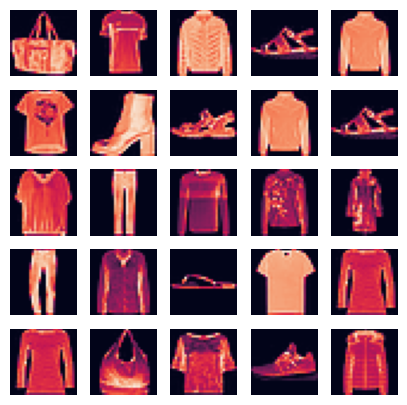
indexes = np.random.randint(0, images.shape[0], size=25)
images_rand = images[indexes]
plt.figure(figsize=(5,5))
for i in range(25):
    plt.subplot(5, 5, i+1)
    image = images_rand[i]
    plt.imshow(image[0])
    plt.axis('off')

plt.show()
plt.close('all')

Przykładowy model sieci nueronowej (bez konwolucji) - czy sądzisz, że to dobre rozwiązanie?

# Define the network architecture
from torch import nn, optim
import torch.nn.functional as F

model = nn.Sequential(nn.Linear(784, 128),
                      nn.ReLU(),
                      nn.Linear(128, 10),
                      nn.LogSoftmax(dim = 1)
                     )

# Define the loss
criterion = nn.NLLLoss()

# Define the optimizer
optimizer = optim.Adam(model.parameters(), lr = 0.002)

# Define the epochs
epochs = 30

train_losses, test_losses = [], []

for e in range(epochs):
  running_loss = 0
  for images, labels in trainloader:
    # Flatten Fashion-MNIST images into a 784 long vector
    images = images.view(images.shape[0], -1)
    
    # Training pass
    optimizer.zero_grad()
    
    output = model.forward(images)
    loss = criterion(output, labels)
    loss.backward()
    optimizer.step()
    
    running_loss += loss.item()
  else:
    test_loss = 0
    accuracy = 0
    
    # Turn off gradients for validation, saves memory and computation
    with torch.no_grad():
      # Set the model to evaluation mode
      model.eval()
      
      # Validation pass
      for images, labels in testloader:
        images = images.view(images.shape[0], -1)
        log_ps = model(images)
        test_loss += criterion(log_ps, labels)
        
        ps = torch.exp(log_ps)
        top_p, top_class = ps.topk(1, dim = 1)
        equals = top_class == labels.view(*top_class.shape)
        accuracy += torch.mean(equals.type(torch.FloatTensor))
    
    model.train()
    train_losses.append(running_loss/len(trainloader))
    test_losses.append(test_loss/len(testloader))
    
    print("Epoch: {}/{}..".format(e+1, epochs),
          "Training loss: {:.3f}..".format(running_loss/len(trainloader)),
          "Test loss: {:.3f}..".format(test_loss/len(testloader)),
          "Test Accuracy: {:.3f}".format(accuracy/len(testloader)))
Epoch: 1/30.. Training loss: 0.484.. Test loss: 0.424.. Test Accuracy: 0.848
Epoch: 2/30.. Training loss: 0.378.. Test loss: 0.405.. Test Accuracy: 0.852
Epoch: 3/30.. Training loss: 0.342.. Test loss: 0.418.. Test Accuracy: 0.855
Epoch: 4/30.. Training loss: 0.323.. Test loss: 0.388.. Test Accuracy: 0.862
Epoch: 5/30.. Training loss: 0.308.. Test loss: 0.372.. Test Accuracy: 0.866
Epoch: 6/30.. Training loss: 0.294.. Test loss: 0.374.. Test Accuracy: 0.869
Epoch: 7/30.. Training loss: 0.281.. Test loss: 0.373.. Test Accuracy: 0.870
Epoch: 8/30.. Training loss: 0.271.. Test loss: 0.362.. Test Accuracy: 0.876
Epoch: 9/30.. Training loss: 0.262.. Test loss: 0.366.. Test Accuracy: 0.873
Epoch: 10/30.. Training loss: 0.255.. Test loss: 0.354.. Test Accuracy: 0.881
Epoch: 11/30.. Training loss: 0.248.. Test loss: 0.378.. Test Accuracy: 0.875
Epoch: 12/30.. Training loss: 0.241.. Test loss: 0.372.. Test Accuracy: 0.876
Epoch: 13/30.. Training loss: 0.235.. Test loss: 0.394.. Test Accuracy: 0.878
Epoch: 14/30.. Training loss: 0.226.. Test loss: 0.419.. Test Accuracy: 0.867
Epoch: 15/30.. Training loss: 0.223.. Test loss: 0.382.. Test Accuracy: 0.879
Epoch: 16/30.. Training loss: 0.217.. Test loss: 0.412.. Test Accuracy: 0.872
Epoch: 17/30.. Training loss: 0.212.. Test loss: 0.390.. Test Accuracy: 0.880
Epoch: 18/30.. Training loss: 0.207.. Test loss: 0.379.. Test Accuracy: 0.882
Epoch: 19/30.. Training loss: 0.204.. Test loss: 0.421.. Test Accuracy: 0.875
Epoch: 20/30.. Training loss: 0.197.. Test loss: 0.429.. Test Accuracy: 0.870
Epoch: 21/30.. Training loss: 0.194.. Test loss: 0.410.. Test Accuracy: 0.879
Epoch: 22/30.. Training loss: 0.188.. Test loss: 0.408.. Test Accuracy: 0.876
Epoch: 23/30.. Training loss: 0.190.. Test loss: 0.403.. Test Accuracy: 0.880
Epoch: 24/30.. Training loss: 0.182.. Test loss: 0.422.. Test Accuracy: 0.876
Epoch: 25/30.. Training loss: 0.176.. Test loss: 0.403.. Test Accuracy: 0.883
Epoch: 26/30.. Training loss: 0.177.. Test loss: 0.416.. Test Accuracy: 0.882
Epoch: 27/30.. Training loss: 0.171.. Test loss: 0.454.. Test Accuracy: 0.876
Epoch: 28/30.. Training loss: 0.167.. Test loss: 0.457.. Test Accuracy: 0.877
Epoch: 29/30.. Training loss: 0.170.. Test loss: 0.443.. Test Accuracy: 0.877
Epoch: 30/30.. Training loss: 0.165.. Test loss: 0.444.. Test Accuracy: 0.877
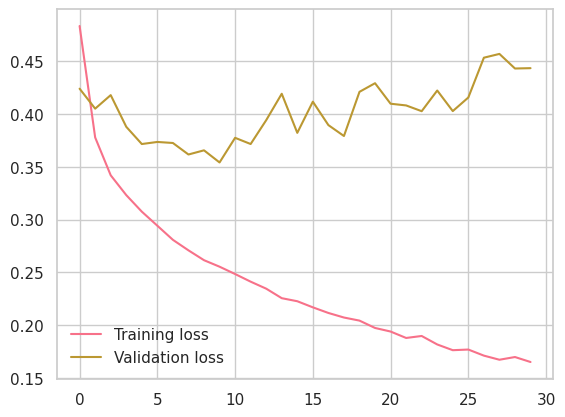
plt.plot(train_losses, label = "Training loss")
plt.plot(test_losses, label = "Validation loss")
plt.legend(frameon = False)

print("My model: \n\n", model, "\n")
print("The state dict keys: \n\n", model.state_dict().keys())
My model: 

 Sequential(
  (0): Linear(in_features=784, out_features=128, bias=True)
  (1): ReLU()
  (2): Linear(in_features=128, out_features=10, bias=True)
  (3): LogSoftmax(dim=1)
) 

The state dict keys: 

 odict_keys(['0.weight', '0.bias', '2.weight', '2.bias'])
torch.save(model.state_dict(), 'checkpoint.pth')

A jakie inne sieci i warstwy możemy wykorzystać do analizy danych nieustrukturyzowanych?

Znajdź odpowiedź na to pytanie w dokumentacji biblioteki PyTorch.

tekst

import pandas as pd
df_train = pd.read_csv("train.csv")
df_train = df_train.drop("index", axis=1)
print(df_train.head())
print(np.bincount(df_train["label"]))
                                                text  label
0  When we started watching this series on cable,...      1
1  Steve Biko was a black activist who tried to r...      1
2  My short comment for this flick is go pick it ...      1
3  As a serious horror fan, I get that certain ma...      0
4  Robert Cummings, Laraine Day and Jean Muir sta...      1
[17452 17548]
# BoW model  - wektoryzator z sklearn
from sklearn.feature_extraction.text import CountVectorizer

cv = CountVectorizer(lowercase=True, max_features=10_000, stop_words="english")

cv.fit(df_train["text"])
CountVectorizer(max_features=10000, stop_words='english')
In a Jupyter environment, please rerun this cell to show the HTML representation or trust the notebook.
On GitHub, the HTML representation is unable to render, please try loading this page with nbviewer.org.
# słownik i nasze zmienne ..
cv.vocabulary_
X_train = cv.transform(df_train["text"])
# to dense matrix
feat_vec = np.array(X_train[0].todense())[0]
print(feat_vec.shape)
np.bincount(feat_vec)
(10000,)
array([9926,   67,    5,    0,    1,    0,    1])

Obiektowe podejście do modelowania

import numpy as np
import pandas as pd
from sklearn.datasets import fetch_openml
from sklearn.model_selection import train_test_split

# Pobieramy prawdziwy zbiór danych o Titanicu
titanic = fetch_openml('titanic', version=1, as_frame=True, parser='auto')
df = titanic.frame

# Wybieramy sensowne cechy
numeric_features = ['age', 'fare']
categorical_features = ['pclass', 'sex', 'embarked']

X = df[numeric_features + categorical_features].copy()
y = df['survived'].astype(int) # Cel: czy przeżył (0 lub 1)

# Celowo dodajemy bezużyteczną kolumnę, aby przetestować Twój transformator!
X['useless_column'] = 'Taka Sama Wartosc'
categorical_features.append('useless_column')

# Podział na zbiór treningowy i testowy
X_tr, X_test, y_tr, y_test = train_test_split(X, y, test_size=0.2, random_state=42)
# ==========================================
# 3. BUDOWA PIPELINE
# ==========================================


from sklearn.pipeline import Pipeline
from sklearn.compose import ColumnTransformer
from sklearn.preprocessing import StandardScaler, OneHotEncoder
from sklearn.impute import SimpleImputer
from sklearn.linear_model import LogisticRegression
from sklearn.ensemble import RandomForestClassifier
from sklearn.base import BaseEstimator, TransformerMixin, ClassifierMixin

# Pipeline dla danych numerycznych
numeric_transformer = Pipeline(steps=[
    ("imputer", SimpleImputer(strategy="mean")),
    ("scaler", StandardScaler())
])

# Pipeline dla danych kategorycznych (wstrzykujemy Twój transformator na początek!)
categorical_transformer = Pipeline(steps=[
    ("imputer", SimpleImputer(strategy="most_frequent")),
    ("encoder", OneHotEncoder(handle_unknown="ignore", sparse_output=False))
])
# Łączenie transformatorów
preprocessor = ColumnTransformer(transformers=[
    ("num_trans", numeric_transformer, numeric_features),
    ("cat_trans", categorical_transformer, categorical_features)
])

# Główny pipeline z domyślnym modelem (na start Logistic Regression)
full_pipeline = Pipeline(steps=[
    ("preproc", preprocessor),
    ("model", LogisticRegression())
])
# ==========================================
# 4. TUNING HIPERPARAMETRÓW (GRID SEARCH)
# ==========================================


from sklearn.model_selection import GridSearchCV

# Siatka parametrów uwzględniająca RandomForest, LogisticRegression oraz nasz model losowy
param_grid = [
    # Siatka 1: Random Forest
    {
        "preproc__num_trans__imputer__strategy": ["mean", "median"],
        "model": [RandomForestClassifier(random_state=42)],
        "model__n_estimators": [10, 50, 100],
        "model__max_depth": [None, 5, 10]
    },
    # Siatka 2: Logistic Regression
    {
        "preproc__num_trans__imputer__strategy": ["mean", "median"],
        "model": [LogisticRegression(max_iter=1000)],
        "model__C": [0.1, 1.0, 10.0]
    },
]

# Uruchomienie wyszukiwania
grid_search = GridSearchCV(full_pipeline, param_grid, cv=3, verbose=1, n_jobs=-1)
grid_search.fit(X_tr, y_tr)
Fitting 3 folds for each of 24 candidates, totalling 72 fits
GridSearchCV(cv=3,
             estimator=Pipeline(steps=[('preproc',
                                        ColumnTransformer(transformers=[('num_trans',
                                                                         Pipeline(steps=[('imputer',
                                                                                          SimpleImputer()),
                                                                                         ('scaler',
                                                                                          StandardScaler())]),
                                                                         ['age',
                                                                          'fare']),
                                                                        ('cat_trans',
                                                                         Pipeline(steps=[('imputer',
                                                                                          SimpleImputer(strategy='most_frequent')),
                                                                                         ('encoder',
                                                                                          OneHotEncoder(handle_unknown='ignore',
                                                                                                        sparse_output=False))]),
                                                                         ['pcla...
                                       ('model', LogisticRegression())]),
             n_jobs=-1,
             param_grid=[{'model': [RandomForestClassifier(random_state=42)],
                          'model__max_depth': [None, 5, 10],
                          'model__n_estimators': [10, 50, 100],
                          'preproc__num_trans__imputer__strategy': ['mean',
                                                                    'median']},
                         {'model': [LogisticRegression(max_iter=1000)],
                          'model__C': [0.1, 1.0, 10.0],
                          'preproc__num_trans__imputer__strategy': ['mean',
                                                                    'median']}],
             verbose=1)
In a Jupyter environment, please rerun this cell to show the HTML representation or trust the notebook.
On GitHub, the HTML representation is unable to render, please try loading this page with nbviewer.org.
print("\n" + "="*40)
print("NAJLEPSZE PARAMETRY:")
print("="*40)
for param, val in grid_search.best_params_.items():
    print(f"{param}: {val}")

# Wynik na zbiorze testowym dla najlepszego modelu
best_model_score = grid_search.score(X_test, y_test)

========================================
NAJLEPSZE PARAMETRY:
========================================
model: RandomForestClassifier(random_state=42)
model__max_depth: 5
model__n_estimators: 100
preproc__num_trans__imputer__strategy: mean
# Twój transformator usuwający kolumny z jedną wartością
class DelOneValueFeature(BaseEstimator, TransformerMixin):
    def __init__(self):
        self.one_value_features = []
        
    def fit(self, X, y=None):
        # Konwersja na DataFrame, jeśli dane wejściowe to NumPy array
        if not isinstance(X, pd.DataFrame):
            X = pd.DataFrame(X)
        
        self.one_value_features = [col for col in X.columns if X[col].nunique() == 1]
        return self

    def transform(self, X, y=None):
        if not isinstance(X, pd.DataFrame):
            X = pd.DataFrame(X)
        if not self.one_value_features:
            return X
        return X.drop(columns=self.one_value_features)


# Model losowy (Dummy/Random Classifier) w pełni zgodny ze scikit-learn
class RandomClassifier(BaseEstimator, ClassifierMixin):
    def __init__(self, random_state=None):
        self.random_state = random_state
        self.classes_ = None

    def fit(self, X, y):
        # Zapamiętujemy unikalne klasy z wektora docelowego
        self.classes_ = np.unique(y)
        return self

    def predict(self, X):
        np.random.seed(self.random_state)
        # Losujemy klasy dla każdego wiersza w X
        return np.random.choice(self.classes_, size=len(X))

    def predict_proba(self, X):
        np.random.seed(self.random_state)
        # Losujemy prawdopodobieństwa, które sumują się do 1
        raw_probs = np.random.rand(len(X), len(self.classes_))
        return raw_probs / raw_probs.sum(axis=1, keepdims=True)
# Pipeline dla danych kategorycznych (wstrzykujemy Twój transformator na początek!)
categorical_transformer = Pipeline(steps=[
    ("remover", DelOneValueFeature()),  # Usunie 'useless_column' przed OneHotEncoderem!
    ("imputer", SimpleImputer(strategy="most_frequent")),
    ("encoder", OneHotEncoder(handle_unknown="ignore", sparse_output=False))
])
# Siatka parametrów uwzględniająca RandomForest, LogisticRegression oraz nasz model losowy
param_grid = [
    # Siatka 1: Random Forest
    {
        "preproc__num_trans__imputer__strategy": ["mean", "median"],
        "model": [RandomForestClassifier(random_state=42)],
        "model__n_estimators": [10, 50, 100],
        "model__max_depth": [None, 5, 10]
    },
    # Siatka 2: Logistic Regression
    {
        "preproc__num_trans__imputer__strategy": ["mean", "median"],
        "model": [LogisticRegression(max_iter=1000)],
        "model__C": [0.1, 1.0, 10.0]
    },
    # Siatka 3: Nasz własny model losowy (Baseline do porównania)
    {
        "model": [RandomClassifier(random_state=42)]
    }
]

# Uruchomienie wyszukiwania
grid_search = GridSearchCV(full_pipeline, param_grid, cv=3, verbose=1, n_jobs=-1)
grid_search.fit(X_tr, y_tr)
Fitting 3 folds for each of 25 candidates, totalling 75 fits
GridSearchCV(cv=3,
             estimator=Pipeline(steps=[('preproc',
                                        ColumnTransformer(transformers=[('num_trans',
                                                                         Pipeline(steps=[('imputer',
                                                                                          SimpleImputer()),
                                                                                         ('scaler',
                                                                                          StandardScaler())]),
                                                                         ['age',
                                                                          'fare']),
                                                                        ('cat_trans',
                                                                         Pipeline(steps=[('imputer',
                                                                                          SimpleImputer(strategy='most_frequent')),
                                                                                         ('encoder',
                                                                                          OneHotEncoder(handle_unknown='ignore',
                                                                                                        sparse_output=False))]),
                                                                         ['pcla...
             param_grid=[{'model': [RandomForestClassifier(random_state=42)],
                          'model__max_depth': [None, 5, 10],
                          'model__n_estimators': [10, 50, 100],
                          'preproc__num_trans__imputer__strategy': ['mean',
                                                                    'median']},
                         {'model': [LogisticRegression(max_iter=1000)],
                          'model__C': [0.1, 1.0, 10.0],
                          'preproc__num_trans__imputer__strategy': ['mean',
                                                                    'median']},
                         {'model': [RandomClassifier(random_state=42)]}],
             verbose=1)
In a Jupyter environment, please rerun this cell to show the HTML representation or trust the notebook.
On GitHub, the HTML representation is unable to render, please try loading this page with nbviewer.org.
print("\n" + "="*40)
print("NAJLEPSZE PARAMETRY:")
print("="*40)
for param, val in grid_search.best_params_.items():
    print(f"{param}: {val}")

# Wynik na zbiorze testowym dla najlepszego modelu
best_model_score = grid_search.score(X_test, y_test)

# Sprawdźmy jak poradziłby sobie sam model losowy dla porównania
random_baseline = RandomClassifier(random_state=42)
random_baseline.fit(X_tr, y_tr)
random_score = random_baseline.score(X_test, y_test)

print("\n" + "="*40)
print("PORÓWNANIE DOKŁADNOŚCI (ACCURACY):")
print("="*40)
print(f"Nasz najlepszy model z GridSearch: {best_model_score:.4f}")
print(f"Model stricte losowy (Baseline):  {random_score:.4f}")

========================================
NAJLEPSZE PARAMETRY:
========================================
model: RandomForestClassifier(random_state=42)
model__max_depth: 5
model__n_estimators: 100
preproc__num_trans__imputer__strategy: mean

========================================
PORÓWNANIE DOKŁADNOŚCI (ACCURACY):
========================================
Nasz najlepszy model z GridSearch: 0.7634
Model stricte losowy (Baseline):  0.4847